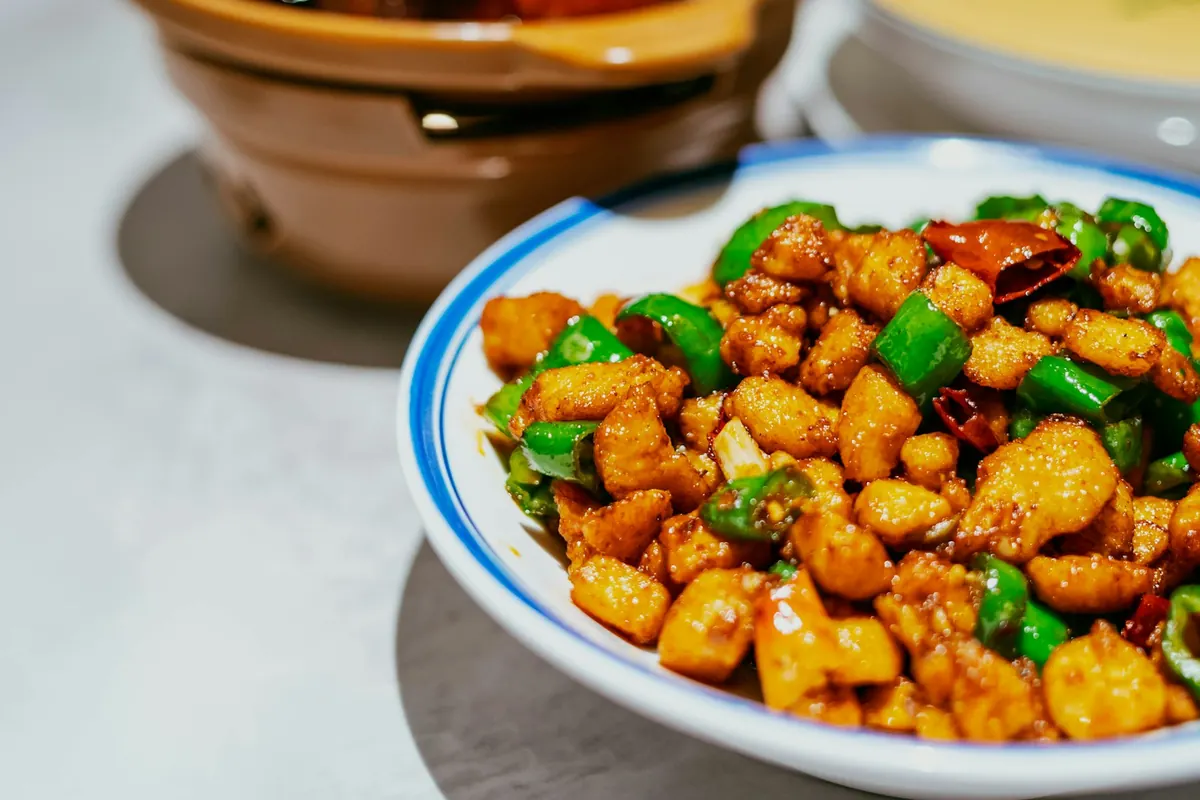
No Chinese takeaway on ChineseTakeaway.co.uk has added kung po chicken to its menu with us yet. Many takeaways haven’t added their menus, so search near you to see the Chinese takeaways closest to you.
One name, different expectations
Sichuan versions are associated with diced chicken, dried chillies and peanuts, with a balance of savoury, sweet and tangy flavours. Sichuan pepper may contribute a tingling sensation. A UK takeaway interpretation may instead use a sweeter, thicker sauce, additional vegetables or coated chicken, without much of that tingling character.
Neither the spelling kung po nor kung pao reliably distinguishes those preparations on a British menu. Descriptions mentioning crispy chicken, cashews, vegetables or a sweet chilli sauce offer more useful clues. If you have a particular version in mind, ask about the chicken coating and sauce rather than relying on the spelling alone.
The sauce and the crunch
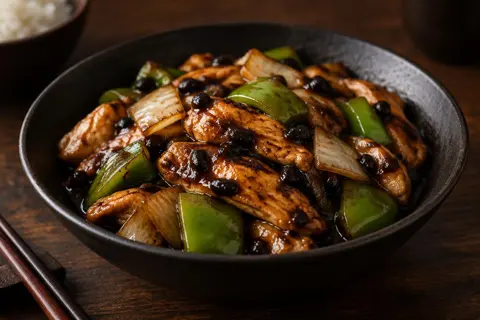
Takeaway recipes may combine soy sauce, vinegar, sugar and chilli, thickened enough to coat the chicken and vegetables. Peppers, onion or water chestnuts can add bite. The balance ranges from gently sweet with a chilli finish to sharper and more assertive, depending on the kitchen and its sauce base.
Peanuts are closely associated with the dish, though a local version may omit them or use cashews instead. They provide a dry crunch against the glossy sauce and tender chicken. Their absence from the visible top of a portion is not evidence that peanuts or nuts were absent during cooking.
Questions that improve your order
Ask whether the chicken is battered or uncoated, which nuts are used and how hot the sauce is. Those three details reveal more than a generic medium or hot symbol can. If you enjoy heat but not sweetness, explain that preference: adding extra chilli will not necessarily change a sweet sauce base.
Plain or egg fried rice gives the sauce somewhere to go without adding another strong chilli flavour. Choose a lighter starter if you want the chicken to remain the focus. Recipes vary, so allergy checks should cover peanuts, any cashews, sauces and shared equipment, even when the menu description does not mention nuts. If you are sharing, keep serving spoons separate and retain the labelled containers so everyone can identify their dish; this is useful organisation, not a substitute for confirmed allergy-safe preparation.
Key Ingredients
Typical ingredients; every kitchen has its own recipe.
- Chicken
- Chilli
- Peanuts
- Soy sauce
- Vinegar
- Sugar
- Peppers
- Garlic
Allergens and Dietary Information
Commonly contains or may contain: Peanuts, Soya, Gluten (wheat), Nuts (cashews).
Usually a meat dish that may contain peanuts or cashews, it is unlikely to suit vegetarian diets and needs specific allergy checks with the takeaway.
Ingredients and allergens can vary between restaurants. Always check directly with the takeaway before ordering if you have a food allergy or specific dietary requirement.
What Goes Well With Kung Po Chicken?
Find Kung Po Chicken at Takeaways Near You
Enter your postcode to see Chinese takeaways on ChineseTakeaway.co.uk whose menus list kung po chicken.
Frequently Asked Questions
Are kung po, kung pao and gong bao different dishes?
They are alternative spellings used for the same broad dish family. On UK menus, the spelling does not guarantee a particular recipe, so compare the ingredient and preparation descriptions.
Does kung po chicken always contain peanuts?
Peanuts are strongly associated with the dish, but takeaway recipes differ and some use cashews or omit a visible nut topping. For an allergy, ask about the complete recipe and shared preparation, not simply whether the garnish can be left off.
Will it have the numbing heat of Sichuan pepper?
Some versions may, but many British takeaway interpretations focus on chilli and a sweet, tangy sauce. Ask specifically about Sichuan pepper if that flavour and sensation are what you want.
Photo: Tommao Wang (Unsplash License). Photos are illustrative, not a particular takeaway’s dish. Guide written by ChineseTakeaway.co.uk, last reviewed 11 November 2026.